
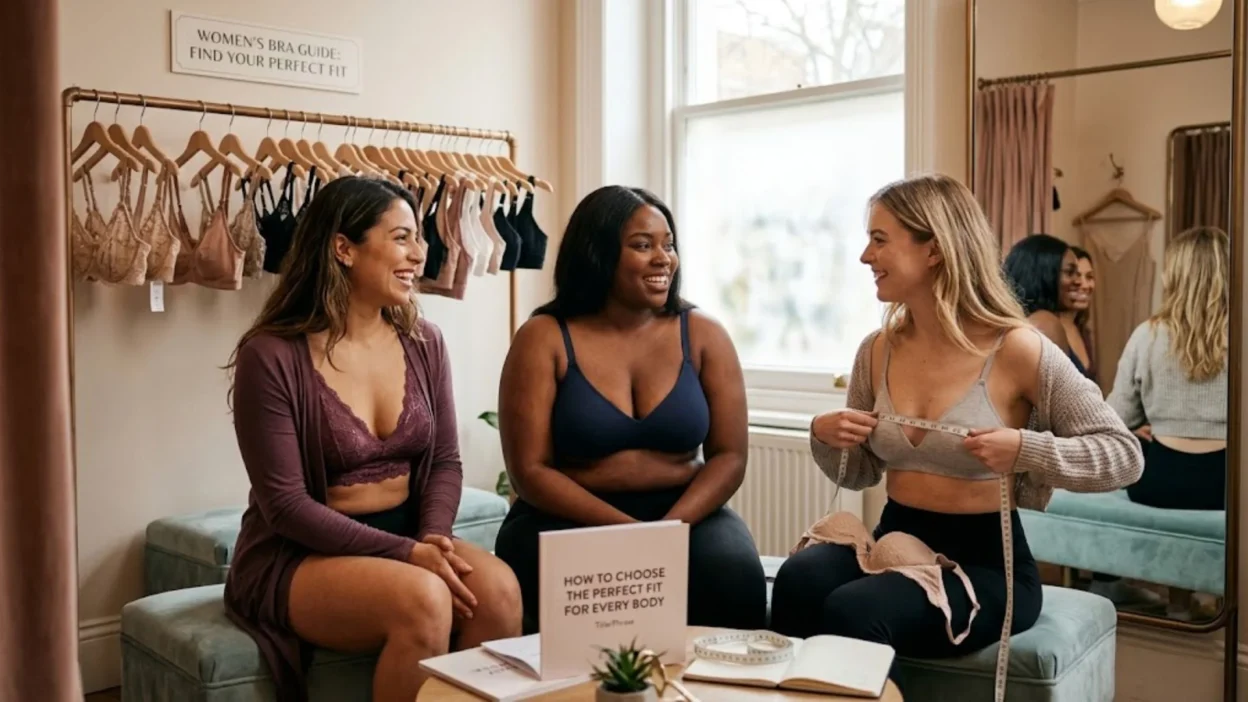
Finding the right women’s bra isn’t just about style — it’s about comfort, support, and confidence that lasts all day. A well-fitted bra can change how your clothes sit, how your posture feels, and honestly, how you carry yourself through the day. Yet so many women are wearing the wrong size without even realizing it.
This guide walks you through everything that actually matters: bra types, sizing, fabric choices, common mistakes, and how to know when it’s time to replace an old favorite. Whether you’re shopping for everyday wear, workouts, or something for a special outfit, you’ll find practical, no-fluff advice here that you can actually use the next time you shop.
Let’s get into it.
Different Types of Women’s Bra Explained
Not every bra serves the same purpose, and that’s exactly why most women end up with a drawer full of styles they never wear. Understanding the basic categories makes shopping faster and helps you build a wardrobe that actually works for your daily life.
T-Shirt Bra
This is the most common everyday style. It has smooth, seamless cups designed to sit invisibly under fitted tops and t-shirts, without any visible lines or lace texture showing through.
Push-Up Bra
Push-up styles use padded inserts or angled cups to lift and add fullness. These work well under low-cut tops or when you want a more defined silhouette for a night out.
Balconette Bra
A balconette has a lower-cut cup and wider-set straps, making it a good choice for square or scoop-neck tops where you don’t want the bra visible.
Sports Bra
Built for movement, sports bras use compression or encapsulation to reduce bounce during exercise. They’re categorized by support level — light, medium, and high impact.
Wireless Bra
These skip the underwire entirely, relying on fabric structure for support. They’re popular for lounging, sleep, or all-day comfort without pressure points.
How to Measure Your Bra Size at Home
Most women are wearing the wrong bra size, and it usually comes down to skipping a proper measurement. The good news is you can do this accurately at home in under five minutes with just a soft measuring tape.
Step 1: Measure Your Band Size
Wrap the tape snugly around your ribcage, directly under your bust, keeping it parallel to the floor. Round the number to the nearest whole inch.
Step 2: Measure Your Bust Size
Measure around the fullest part of your bust while wearing an unpadded bra, keeping the tape level and not too tight.
Step 3: Calculate Your Cup Size
Subtract your band measurement from your bust measurement. Each inch of difference typically corresponds to a cup size, starting at A for a one-inch difference.
Keep in mind that sizing charts vary slightly between brands, so use this as a starting point rather than a fixed rule.
Common Bra Fitting Mistakes to Avoid
Even women who’ve been buying bras for years often repeat the same fitting errors without realizing it. Spotting these early can save you from months of discomfort and wasted money on the wrong size.
Watch out for these signs of a poor fit:
- The band rides up in the back instead of sitting level
- Straps constantly slip off your shoulders
- Underwire pokes or digs into your skin
- Cups gap open or spill over at the top
- You feel the need to adjust it every few minutes
If any of these sound familiar, it’s a strong signal to get remeasured rather than tightening the same size further.
Choosing the Right Bra Fabric for Comfort
The fabric of a bra affects far more than how it looks — it determines breathability, stretch, and how the bra feels against your skin after wearing it for hours. Picking the right material matters just as much as picking the right size.
Cotton
Soft, breathable, and gentle on sensitive skin, cotton is a solid choice for everyday wear, especially in warmer climates or for women prone to skin irritation.
Lace
Lace adds a decorative touch and is often used on balconette or push-up styles. It looks elegant but can feel slightly less soft directly against the skin, so many brands line it with cotton or microfiber.
Microfiber
This smooth, stretchy fabric moves with your body and works especially well under fitted clothing since it creates a seamless look with no visible texture.
Moisture-Wicking Blends
Common in sports bras, these fabrics pull sweat away from the skin and dry quickly, keeping you comfortable during workouts or hot weather.
Best Bras for Different Body Types
Body shape plays a bigger role in bra fit than most people expect. The same style that looks flattering on one body might not offer the right support or shape on another, which is why understanding your proportions helps narrow down the search.
Fuller Bust
Full-coverage or minimizer bras with wider straps and a sturdy band tend to offer better support and reduce shoulder strain.
Smaller Bust
Push-up or padded styles can add shape and volume, while lightly lined bras keep things natural without feeling bulky.
Athletic or Broader Shoulders
Racerback styles distribute weight more evenly across the back and shoulders, reducing strap slippage during movement.
Petite Frames
Demi-cup or balconette styles often create better proportion without overwhelming a smaller frame.
Bras for Special Occasions and Outfits
Certain outfits call for specific bra styles, and wearing the wrong one can ruin an otherwise perfect look. Knowing which bra pairs with which outfit saves you from last-minute wardrobe stress.
Backless Outfits
Adhesive or strapless bras with silicone grip bands stay in place without visible straps.
Deep V-Necklines
Plunge bras have a low center gore that sits discreetly below the neckline.
Sheer or Light-Colored Tops
Nude or skin-tone bras blend in better than white, which can actually show through more than expected.
Backless and Strapless Combos
Convertible bras with detachable straps adapt to multiple outfit styles, making them a practical addition to any wardrobe.
When to Replace Your Bra
Bras don’t last forever, even the well-made ones. Elastic breaks down with wear and washing, and a bra that fit perfectly six months ago might no longer be doing its job.
Signs it’s time to shop for a replacement:
- The band feels loose even on the tightest hook
- Cups lose their shape or look worn
- Underwire pokes through the fabric
- Straps have lost their elasticity
- You’ve gained or lost noticeable weight since your last fitting
Most bras hold up well for six to twelve months with regular wear, depending on fabric quality and care.
How to Take Care of Your Bras Properly
Proper care extends the life of a bra significantly and keeps the shape, elasticity, and support intact for longer. A few small habits make a real difference over time.
- Hand wash when possible, or use a mesh laundry bag in the machine
- Avoid the dryer — air dry flat instead
- Rotate between at least two to three bras instead of wearing one daily
- Hook the clasp before washing to prevent snagging
- Store cups facing outward to help them keep their shape
Frequently Asked Questions
How often should I get measured for a bra? It’s a good idea to get remeasured every six to twelve months 📏, especially after weight changes, pregnancy, or a long gap since your last fitting.
What size should I start with if I’ve never been properly measured? Start with a home measurement using the band and bust method, then try that size along with one size up and down in the same style to compare fit.
Why does my bra band ride up in the back? This usually means the band is too loose. The band should sit level and snug, doing most of the support work rather than the straps.
Can I wear the same bra every day? It’s better to rotate between a few bras so the elastic has time to recover between wears, which helps them last longer.
Is it normal for bra sizes to differ between brands? Yes, sizing isn’t standardized across brands, so a size that fits perfectly in one brand may run differently in another 👍.
What’s the difference between a demi-cup and a full-cup bra? A demi-cup covers about half the breast for a lower-cut look, while a full-cup offers complete coverage and tends to provide more support.
Do sports bras need to be replaced more often than regular bras? Yes, because of frequent stretching and washing, sports bras generally wear out faster and may need replacing every six months or so.
Should the bra hook on the loosest or tightest setting when new? Start on the loosest hook when the bra is new, so you have room to tighten it as the elastic naturally stretches with wear.
Conclusion
Choosing the right women’s bra comes down to knowing your actual size, understanding which styles suit your body and outfits, and paying attention to fabric and fit over time. A well-chosen bra isn’t just more comfortable — it genuinely changes how your clothes look and how you feel throughout the day. Use this guide as a reference the next time you shop, get remeasured if it’s been a while, and don’t settle for a bra that doesn’t fit right. Small changes in fit can make a bigger difference than most people expect.

Austin Parker is a humor writer and content creator who specializes in pickup lines, puns, jokes, and witty wordplay. As the lead writer at Pickuplinezio, he enjoys creating entertaining content that helps readers spark conversations, break the ice, and share a smile. His work combines humor, creativity, and modern internet culture to make every interaction a little more memorable.